

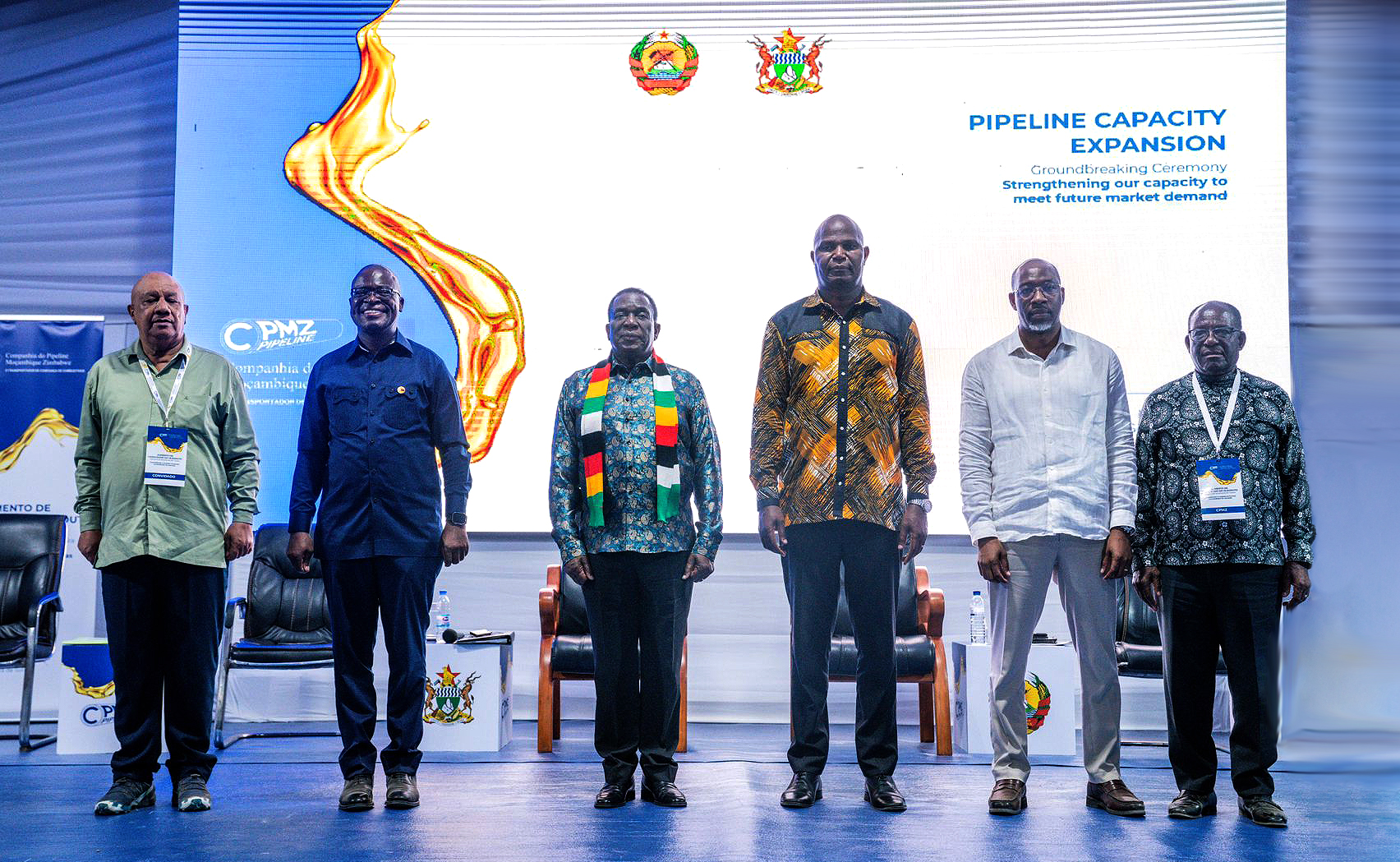

CPMZ launches major expansion of strategic Southern African fuel corridor
NHAMATANDA, MOZAMBIQUE, 2 SEPTEMBER 2026 – The President of Mozambique, H.E. Daniel Chapo and the President of Zimbabwe, H.E. Emmerson Dambudzo Mnangagwa, today broke ground on a major expansion of the Beira-Harare fuel corridor that will increase pipeline capacity by 67% and strengthen energy security across Southern Africa.
The CPMZ project will increase the CPMZ pipeline’s annual transport capacity from 3 million to 5 million cubic metres by the end of 2027, supporting growing fuel demand in Mozambique, Zimbabwe and wider regional markets.
The expansion will add capacity to transport approximately two billion additional litres of fuel annually into Southern Africa’s interior, strengthening a critical supply route connecting the Port of Beira with Zimbabwe and supporting access to diesel, petrol and jet fuel across regional markets, including Zambia, Malawi, Botswana and the Democratic Republic of Congo.
The project represents a significant investment in regional energy resilience and Mozambique-Zimbabwe cooperation, while construction and commissioning will take place without interrupting daily pipeline operations or fuel supplies to markets served by the corridor.
H.E. Daniel Chapo, President of the Republic of Mozambique, said:
“The expansion of the CPMZ pipeline is an important investment in Mozambique’s infrastructure and in the energy security of our region. By strengthening the connection between the Port of Beira and the Southern African hinterland, we are reinforcing Mozambique’s role as a strategic gateway for regional trade while deepening our cooperation with Zimbabwe. This is the kind of infrastructure investment that strengthens regional connectivity, supports economic activity and creates greater resilience for the future.”
H.E. Emmerson Dambudzo Mnangagwa, President of Zimbabwe, added:
“The stronger Beira-Harare corridor will support Zimbabwe’s energy security while creating greater capacity to serve markets beyond our borders. It shows what Mozambique and Zimbabwe can achieve through cooperation around infrastructure of shared regional importance.”
The new pumping stations will be constructed at Nhamatanda in Sofala Province and Messica in Manica Province. The project is being synchronised with the planned expansion of the Petrozim Line between Feruka and Harare, creating an aligned, higher-capacity route from the Mozambican coast into the Southern African hinterland.
The development builds on CPMZ’s previous expansion, completed in 2024, which increased annual pipeline capacity from 2 million to 3 million cubic metres.
“This project adds substantial capacity to one of the region’s most important fuel routes without disrupting the supplies on which countries and businesses rely every day,” said António Laice, Chairman of the Board of Directors
“It is an investment not only in pipeline infrastructure, but in regional trade, industrial activity and the long-term reliability of Southern Africa’s fuel supply network.”
Strengthening a regional gateway
The 294-kilometre CPMZ pipeline transports refined petroleum products from the Port of Beira to Feruka in Zimbabwe. It forms a critical part of the Beira Corridor, which connects the Indian Ocean port with Zimbabwe and other landlocked Southern African economies.
The expansion strengthens Mozambique’s role as a regional trade and logistics gateway while supporting Zimbabwe’s development as an important distribution hub for fuel moving further into the region.
Planning for demand beyond 2027
The two pumping stations form part of a longer-term plan to prepare the corridor for rising regional fuel demand.
Preliminary studies are assessing the potential replacement of the existing pipeline with a larger-diameter line, which could increase annual capacity to approximately 12 million cubic metres and support projected demand through to 2050. Separately, a possible extension of the Harare-Lusaka route into Zambia’s Copperbelt is also being evaluated.
These longer-term options would further integrate regional fuel infrastructure and improve the movement of essential energy products between coastal and landlocked Southern African markets.
CPMZ has operated the Beira-Feruka pipeline since 1982. The pipeline runs continuously, 24 hours a day and 365 days a year, supported by a technical workforce composed entirely of Mozambican professionals.
Its operations use real-time SCADA monitoring and are governed by stringent safety, environmental and risk-prevention standards.